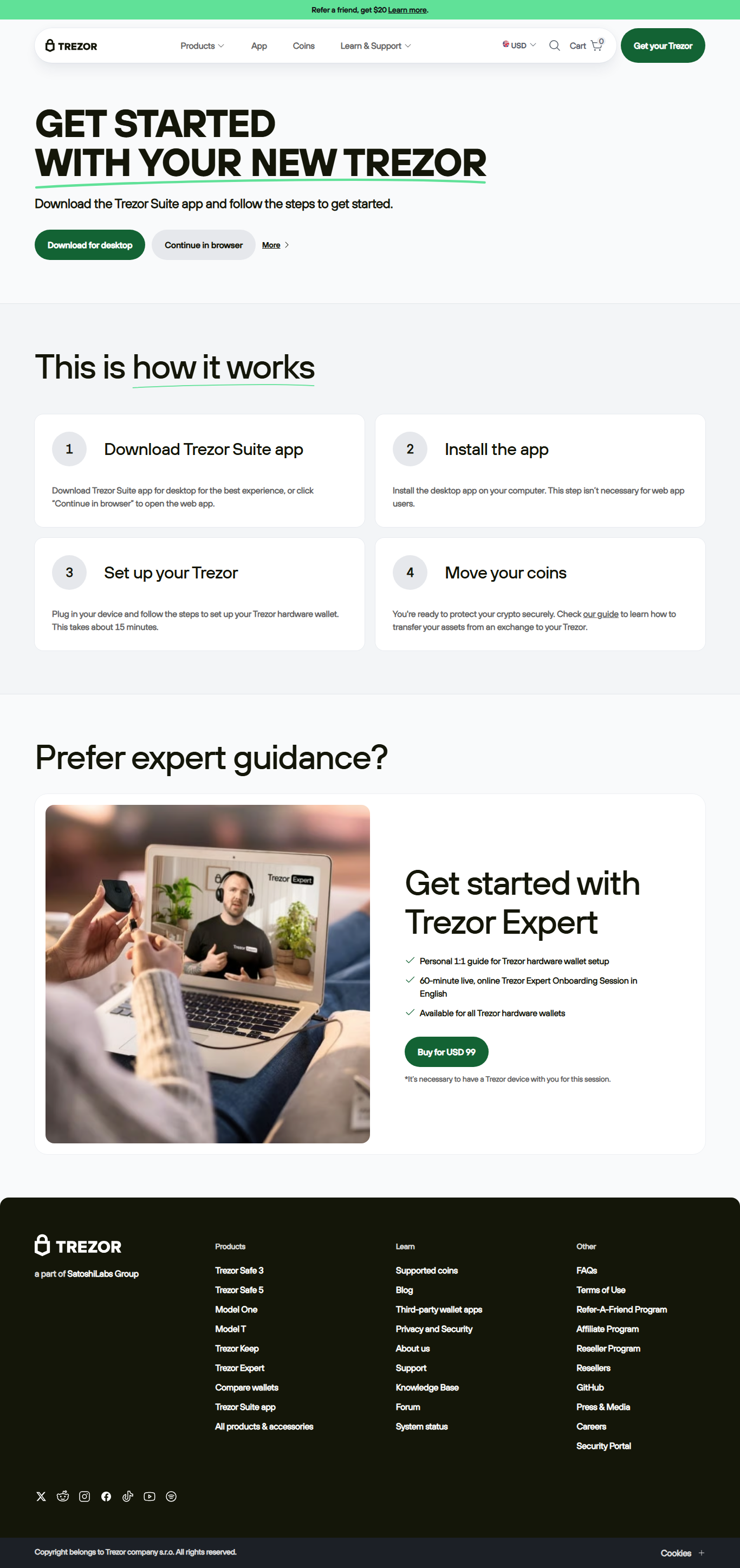
Step-by-Step Guide to Trezor Wallet Login
Cryptocurrency security begins with controlling access to your wallet. Trezor hardware wallets are among the most trusted tools for safeguarding digital assets. Understanding how to perform a secure Trezor Wallet Login is crucial for both beginners and experienced users. This step-by-step guide will walk you through the process, explain key security concepts, and provide tips for managing your wallet safely.
We’ll also cover advanced techniques, real-world examples, and common troubleshooting scenarios so that you can log in confidently every time.
Why Secure Login Matters
Your private keys control your crypto. If anyone gains unauthorized access, they can transfer your assets permanently. Trezor Wallet Login combines hardware authentication, PIN verification, and optional passphrases to keep your wallet secure, even if your computer is compromised.
Key Benefits of Trezor Login
- Physical Device Verification: Access requires the physical Trezor hardware.
- PIN Protection: Each login requires a PIN, randomized on-screen to prevent observation attacks.
- Optional Passphrase: Additional layer of security and privacy for advanced users.
- Offline Key Storage: Your private keys remain offline, reducing exposure to online threats.
Step 1: Unbox and Inspect Your Trezor
Begin by carefully unboxing your Trezor device. Check for tampering and ensure all components, including the USB cable and recovery seed card, are present. A secure device is your first step toward safe login.
Imagine your Trezor device as a high-security vault. If the vault is tampered with, no amount of PIN protection can guarantee safety.
Step 2: Connect Your Device
Use the included USB cable to connect your Trezor to your computer. Open a secure browser and navigate to Trezor.io/start. Launch Trezor Suite to initiate login setup. The software ensures secure communication between your computer and the hardware device.
Think of this as turning on your vault’s control panel—communication between device and software must be secure to prevent unauthorized access.
Step 3: Enter Your PIN
During setup, you created a PIN. Enter this PIN on your device to log in. Trezor randomizes the keypad every time to prevent shoulder-surfing and keylogging attacks. Always verify the PIN layout on the device screen, not just your computer.
Tips for Secure PIN Usage
- Use a non-obvious sequence, avoiding birthdays or repeating numbers.
- Never share your PIN with anyone.
- Do not store your PIN digitally or in unprotected files.
Step 4: Optional Passphrase for Extra Security
The passphrase feature creates a hidden wallet that is only accessible when the correct passphrase is entered during login. It acts as an additional key to your vault, providing enhanced security and privacy.
Example: You could have two wallets—one for everyday transactions and another hidden wallet for long-term holdings, both accessible only with the correct passphrase.
Step 5: Accessing Your Wallet Features
Once authenticated, Trezor Suite provides a dashboard to manage your cryptocurrencies. You can:
- View portfolio balances
- Send and receive crypto assets
- Create multiple wallets
- Check transaction history
- Update firmware and security settings
Every transaction requires confirmation on the Trezor device, ensuring your private keys never leave the hardware.
Advanced Tips for Secure Login
Passphrase Wallets
Create separate wallets with unique passphrases for enhanced security. Each wallet is isolated, reducing risk if one passphrase is compromised.
Multi-Device Access
You can access Trezor Suite on multiple computers, but the hardware device must be connected for login, preventing remote hacking attempts.
Custom Transaction Fees
Advanced users can manually set transaction fees for faster confirmation or cost savings during high network congestion.
DeFi Integration
Connect your Trezor safely to decentralized finance apps for staking, trading, and smart contract interactions while keeping private keys offline.
Security Best Practices
- Keep your 24-word recovery seed offline and in a secure location.
- Update firmware regularly for latest security patches.
- Avoid phishing attempts; always use official URLs or Trezor Suite.
- Do not store PINs or passphrases digitally.
- Use hidden wallets for sensitive funds or long-term storage.
Troubleshooting Common Login Issues
Device Not Recognized
Ensure your USB cable and port are functioning. Restart Trezor Suite and reconnect the device.
Incorrect PIN
After multiple failed attempts, the device resets to protect funds. Use your recovery seed to restore access.
Passphrase Problems
Passphrases are case-sensitive. Ensure correct spelling and avoid using easily guessable phrases.
Frequently Asked Questions (FAQ)
1. How do I perform Trezor Wallet Login?
Connect your device, enter your PIN, optionally input a passphrase, and access your wallet through Trezor Suite.
2. Can I log in without the device?
No. Physical Trezor hardware is required for secure login.
3. What if I forget my PIN?
Use the 24-word recovery seed to restore your wallet on a new device.
4. Is Trezor Wallet Login beginner-friendly?
Yes. The process is intuitive, with Trezor Suite guiding you step-by-step while also offering advanced options for experienced users.
5. Can I manage multiple wallets with Trezor?
Yes. Use different passphrases to create isolated wallets for enhanced security and privacy.
6. How do I avoid phishing attacks?
Always access your wallet via Trezor Suite or official URLs and never share your PIN or recovery seed.